
YouTube is the second largest search engine in the world, owned by Google and fully integrated within Google Ads. For advertisers, this means YouTube is not just a social platform; it is part of a powerful intent-driven advertising ecosystem.
With over a billion users accessing the platform regularly, YouTube is no longer just a brand awareness channel. It is a measurable, performance-driven acquisition engine capable of generating leads, sales, and long-term customer value when structured correctly.
For digital marketers, YouTube Ads provide something unique: attention at scale. Unlike search, where you capture existing intent, YouTube allows you to shape intent before a prospect searches. When combined with strong conversion tracking and AI bidding, it becomes a full-funnel growth channel.
This guide outlines over 2000 words of strategic, technical, and optimisation-focused YouTube Ads tips designed to improve efficiency, lead quality, and return on investment.
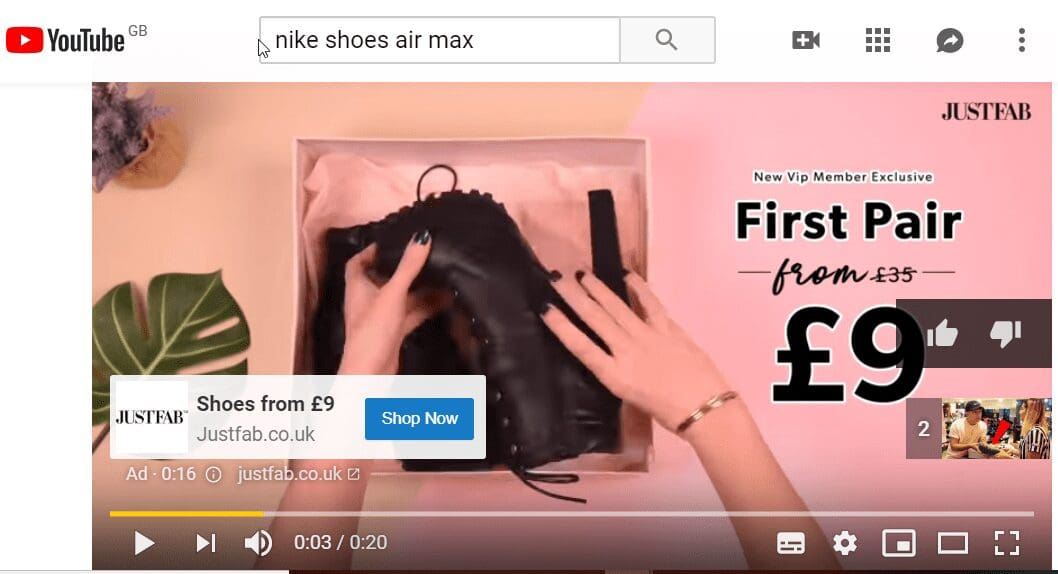
Understanding YouTube’s Strategic Position in the Funnel
Before discussing tactical optimisation, it is important to understand YouTube’s role in the wider marketing ecosystem.
YouTube operates across three key stages:
Awareness: Introducing a problem or opportunity
Consideration: Educating and building trust
Conversion: Driving direct action
Many advertisers incorrectly assume YouTube is purely upper-funnel. In reality, with Smart Bidding, remarketing, CRM integration, and value-based bidding, YouTube can drive measurable conversions at scale.
The key is aligning objective, creative, targeting, and bidding strategy from the outset.
Define the Objective Before Selecting the Format
One of the most common mistakes is selecting an ad format first and deciding the goal later.
Instead, define your optimisation metric:
Cost per view (CPV) for awareness
Cost per lead (CPL) for lead generation
Cost per acquisition (CPA) for sales
Return on ad spend (ROAS) for e-commerce
Your objective determines:
Campaign type
Bidding strategy
Creative length
Targeting approach
Measurement framework
When the objective is unclear, performance becomes inconsistent and optimisation directionless.
Choosing the Right YouTube Ad Format
YouTube offers multiple ad formats inside Google Ads. Each serves a different purpose.
Skippable In-Stream Ads
These ads allow users to skip after 5 seconds. They are highly scalable for direct response campaigns because you only pay when users watch beyond 30 seconds or engage.
Best for:
Consideration
Lead generation
Sales
Non-Skippable In-Stream Ads
These run up to 15 seconds and cannot be skipped. They are typically used for brand recall and awareness campaigns where message exposure is critical.
Bumper Ads (6 Seconds)
Short, unskippable ads ideal for brand reinforcement and high-frequency messaging.
In-Feed Video Ads (formerly Discovery Ads)
These appear in YouTube search results and alongside related videos. The thumbnail and headline drive performance.
YouTube Shorts Ads
Vertical, short-form placements that align with modern viewing behaviour and mobile consumption patterns.
Masthead Ads
Premium homepage placements for major launches. Suitable for large-scale brand campaigns.
For performance-driven advertisers, skippable in-stream ads with conversion bidding are typically the most flexible and scalable format.
Mastering the First Five Seconds
On skippable ads, users can skip after five seconds. Performance is often determined entirely by this initial window.
Avoid:
Slow brand intros
Generic company introductions
Long cinematic build-ups
Instead:
State the problem immediately
Present a bold claim
Ask a direct question
Introduce visual tension
Use strong contrast and movement
Example weak hook:
“Hi, we’re a company that provides…”
Example strong hook:
“Tired of wasting money on ads that don’t convert?”
The hook determines view rate, cost efficiency, and overall algorithmic favourability.
Creative Essentials That Drive Performance
YouTube Ads must be engineered, not simply filmed.
Deliver Value Immediately
Give viewers a reason to continue watching within seconds. Highlight the pain point or benefit straight away.
Use Emotional Storytelling
Storytelling increases retention. Humans are wired to respond to narrative arcs. Even short ads should include:
A problem
A solution
A result
Design for Sound-Off Viewing
Most mobile viewers watch without sound. Therefore:
Use bold text overlays
Include captions
Ensure the message works visually
However, reward sound-on viewers with strong voiceovers, music, or satisfying audio cues.
Front-Load Your Brand
Introduce your brand early. If users skip at five seconds, they should still know who you are.
Focus on One Core Message
Avoid feature overload. Choose one primary benefit and build the entire creative around it.
Align Creative With Funnel Stage
Creative must reflect audience temperature.
Cold Traffic
Focus on education
Highlight the problem
Build authority
Avoid aggressive selling
Warm Audiences (Remarketing)
Reinforce value
Address objections
Provide proof
Introduce urgency
Hot Audiences
Strong CTA
Clear offer
Incentives
Testimonials or case studies
Matching creative to funnel stage dramatically improves conversion rates.
Audience Targeting Strategies That Scale
Modern YouTube campaigns rely heavily on audience signals rather than rigid targeting.
Remarketing
Target:
Website visitors
Cart abandoners
YouTube viewers
Channel subscribers
Remarketing audiences are warm and typically convert at lower cost.
Affinity Audiences
Broad interest categories such as travel enthusiasts or tech early adopters. Useful for awareness.
In-Market Audiences
Users actively researching products or services. Essential for performance campaigns.
Custom Audiences
Create audiences from:
Customer lists
Competitor keywords
Industry search terms
This allows precise targeting based on user behaviour and intent.
Demographic Targeting
Refine by:
Age
Gender
Household income (where available)
Avoid over-segmentation. Provide signals and allow Google’s AI to expand intelligently.
Campaign Setup Best Practices
Proper setup influences performance significantly.
Upload videos to YouTube first
Link YouTube channel to Google Ads
Set clear daily budgets
Use Smart Bidding aligned to objective
Structure campaigns by funnel stage
Start with modest budgets to gather data, then scale based on performance signals.
Conversion Tracking Is Non-Negotiable
Without accurate tracking, YouTube cannot optimise effectively. Implement:
Google Ads conversion tracking
Enhanced conversions
CRM offline conversion tracking
Value-based tracking where possible
If you generate leads, consider assigning values to:
Sales-qualified leads
Closed deals
Revenue
Optimising for value rather than volume significantly improves lead quality.
Landing Page Optimisation for Video Traffic
YouTube traffic behaves differently from search traffic. It is interruption-based rather than intent-based. Best practices:
Match message continuity
Repeat the core promise
Use video on the landing page
Simplify forms
Reduce distractions
The landing page must reinforce what the ad promised.
A/B Testing Framework
Never rely on one video. Test:
Hooks
Lengths (15s vs 30s vs 60s)
CTAs
Thumbnails
Audience segments
Use Google Ads video experiments to compare creatives scientifically. Pause underperformers. Scale winners.
Understanding Key Metrics
Do not focus solely on views. Monitor:
View rate (VTR)
Average view duration
Click-through rate (CTR)
Conversion rate
Cost per conversion
View-through conversions
Assisted conversions
A low view rate typically indicates a weak hook. A steep drop-off in retention suggests creative issues.
Monitor Frequency and Ad Fatigue
High frequency reduces effectiveness. Watch for:
Declining view rates
Rising CPV
Reduced engagement
Rotate creatives before fatigue sets in. Refresh hooks regularly.
Placement Optimisation
Review placement reports frequently.
Exclude:
Irrelevant kids channels
Low-quality gaming placements
Non-converting categories
Brand safety and relevance protect performance and budget efficiency.
Integrating YouTube With Search Campaigns
YouTube and Search work best together. Typical structure:
YouTube builds awareness
User searches brand later
Search campaign captures conversion
This often increases branded search conversion rates and lowers overall acquisition costs.
Sequential Messaging Strategy
Build structured journeys:
Awareness video
Education video
Offer video
Each stage deepens trust and shortens decision cycles. Sequential campaigns increase cumulative impact and conversion likelihood.
Leveraging YouTube Shorts
Shorts inventory continues to expand. Ideal for:
Fast hooks
Product demonstrations
Mobile-first awareness
Vertical creative improves engagement on mobile devices.
Strong Calls to Action
Always tell viewers what to do next. Examples:
“Book your free consultation”
“Download the guide”
“Get your quote today”
Repeat visually and verbally. Ambiguous CTAs reduce performance.
Branding for Memory Structures
Even if skipped, your brand should be visible.
Logo early
Consistent colours
Recognisable style
Repetition builds recall. Recall increases search behaviour.
Technical Production Tips
Use high-quality thumbnails
Ensure readability on small screens
Optimise for desktop, mobile, and TV
Use end screens and cards
Consider lead form extensions
Quality production enhances credibility and retention.
TrueView and Cost Efficiency
With skippable formats, you typically pay when users watch beyond 30 seconds or interact.
This can be more cost-effective than click-based channels because you only pay for engaged viewers. However, cost efficiency depends entirely on creative strength.
Using YouTube as a Long-Term Asset
YouTube improves over time as:
Data accumulates
Audience signals strengthen
CRM feedback improves
AI bidding refines
Short-term testing matters, but long-term signal accumulation drives compounding returns.
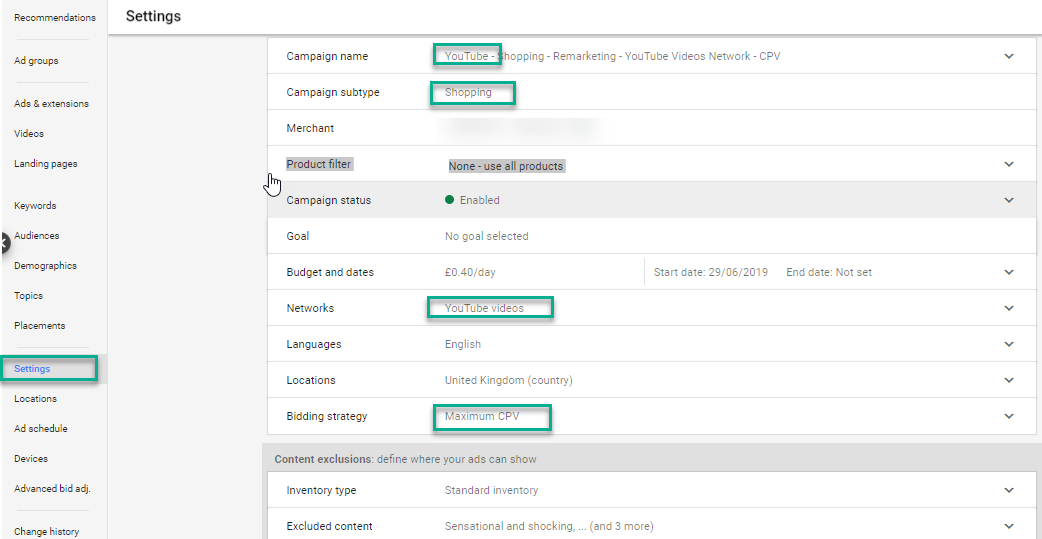
The YouTube Ad Format Guide
YouTube and Google have significantly consolidated and renamed several formats to align with their AI-driven Demand Gen and Video View campaign structures.
Specifically, the term “In-Display Ads” has been replaced with In-Feed Video Ads, and the distinction between “Pre-Roll” and “In-Stream” has been unified under the broader In-Stream category.
Below is the latest list of YouTube ad formats organised by function and campaign objective.
Skippable In-Stream Ads (The Versatile Workhorse)
These are the most common ads shown before, during, or after a video.
Mechanics: Viewers can skip after five seconds. You are charged only if the viewer watches 30 seconds (or the full ad if it is shorter) or interacts with it.
Best for: Lead generation and direct sales. Because payment is tied to engagement, this format is highly cost-effective for filtering out disinterested audiences.
Latest Tip: Use Creative Preferences within Demand Gen and Video View campaigns to prioritise your strongest storytelling assets in this placement.
In-Feed Video Ads (Formerly “In-Display” or “Discovery”)
These ads appear as a thumbnail with supporting text in YouTube search results, the “Watch Next” feed, and the mobile homepage.
Mechanics: Users must actively click the thumbnail to watch the video. You are charged on a cost-per-click (CPC) basis.
Best for: High-intent consideration and building a YouTube channel audience. Since users choose to watch, engagement quality is typically stronger and swipe-away rates are lower.
Latest Tip: In-Feed placements are now central to Demand Gen campaigns, where AI distributes them across YouTube and the Google Discovery feed simultaneously for broader yet intent-aligned reach.
YouTube Shorts Ads (The Growth Leader)
These are vertical video ads shown between organic Shorts content.
Mechanics: Ads are displayed in a 9:16 vertical format (up to 60 seconds). Users can swipe past immediately.
Best for: Reaching Gen Z audiences and mobile-first shoppers at scale.
Latest Tip: Avoid overly polished or corporate-style creative. The highest-performing Shorts ads resemble user-generated content (UGC), appearing more like authentic recommendations or informal product reviews.
Bumper Ads (The Recall Sniper)
Short, unskippable videos limited to six seconds.
Mechanics: Played before, during, or after a video. Charged on a cost-per-thousand-impressions (CPM) basis.
Best for: Boosting brand awareness and increasing frequency among audiences already exposed to longer-form messaging.
Latest Tip: Do not attempt to tell a full story. Use Bumper Ads as reminder units for viewers who have previously watched your 15–30 second Skippable In-Stream ad.
Non-Skippable In-Stream Ads (The Guaranteed Message)
These are typically 15-second ads (up to 20 seconds in some regions) that viewers must watch in full.
Mechanics: No skip option. Charged on a CPM basis.
Best for: Product launches or brand campaigns where the central idea requires uninterrupted attention.
Latest Tip: Use this format cautiously. If the creative is not immediately engaging, non-skippable ads can generate higher viewer frustration compared to skippable alternatives.
Choosing the Right Format Based on Objective
Your selection should always align with your campaign goal. If your objective is immediate sales or lead generation, prioritise:
Skippable In-Stream
In-Feed Video Ads (via Demand Gen campaigns)
If your objective is maximum brand reach, use:
Bumper Ads
Non-Skippable In-Stream Ads
If your objective is mobile growth or viral engagement, focus on:
YouTube Shorts Ads
If your objective is deep research and educational content consumption, consider:
Long-form In-Feed Video Ads
Selecting the correct format is less about preference and more about strategic alignment with AI-driven campaign structures and measurable business outcomes.
Final Strategic Perspective
YouTube Ads are no longer experimental branding tools. Within the broader Google Ads ecosystem, they function as signal amplifiers.
When integrated with:
First-party data
CRM tracking
Offline conversion imports
Structured audience segmentation
Smart Bidding strategies
YouTube becomes a scalable acquisition channel capable of influencing search, display, and Performance Max performance.
Success on YouTube does not come from uploading a video and hoping for views. It comes from aligning:
Objective
Creative
Targeting
Tracking
Bidding
Landing page experience
When these components operate as a unified system, YouTube transitions from a cost centre into a measurable growth engine.
For advertisers willing to invest in structured testing, disciplined optimisation, and high-quality creative, YouTube Ads represent one of the most powerful performance levers available within Google Ads today.