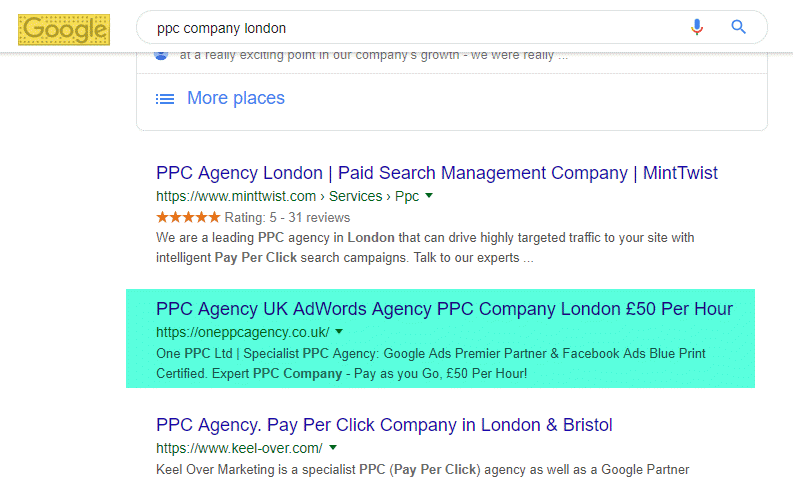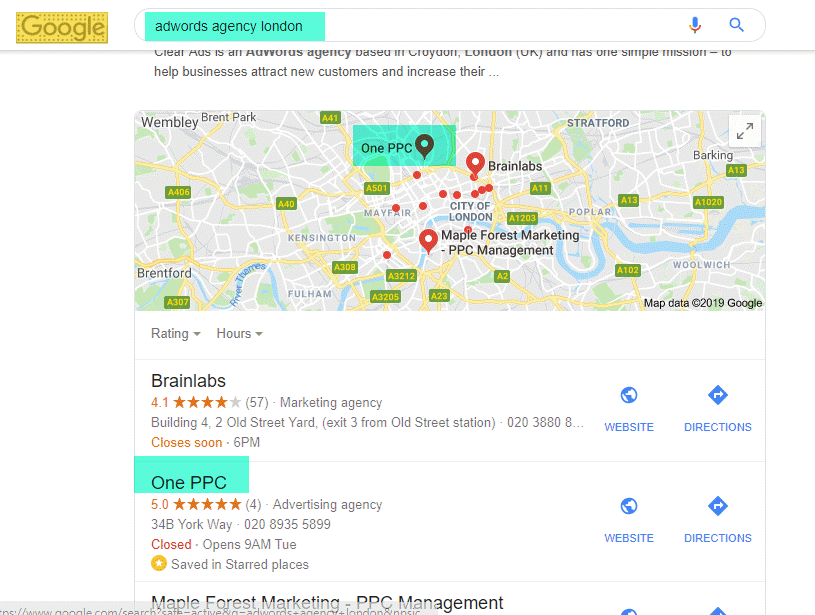
Local SEO helps a business become visible when people search for a product, service or provider in a particular area. That visibility may appear in Google Maps, the local results shown within Google Search, traditional organic listings, Bing, or an AI-generated answer that recommends local options.
The objective is not simply to attract more website visitors. It is to make the business easier to discover, easier to trust and easier to choose when a potential customer has a relevant local need.
That distinction matters. A company can rank for a broad informational phrase and receive plenty of traffic without gaining useful enquiries. Another may receive fewer visits from searches such as “emergency plumber near me”, “private dentist Bristol” or “commercial solicitor Manchester”, but generate far more revenue.
Effective local SEO therefore connects five areas:
A genuinely competitive business, service and website
A complete and credible Google Business Profile
Location and service pages that match real search intent
Consistent evidence from reviews, links, citations and third-party mentions
Accurate measurement of calls, forms, bookings, qualified leads and sales
The tactics have changed, but the central principle has not:
It is easier to rank a strong local business with a useful website than to use SEO tactics to disguise a weak proposition or poor customer experience.
How Local Search Rankings Really Work
Google does not rank a local business in isolation. It attempts to identify the most useful result for a particular searcher, query, location, device and moment.
For Google’s local results, the company publicly describes three principal considerations: relevance, distance and prominence.
Relevance is how closely the business and its information match what the person is looking for.
Distance is how far the business is from the searcher, or from the location implied by the search.
Prominence reflects how well known and credible the business appears, using information that can include links, reviews and other evidence from across the web.
This explains why there is no single local ranking position. The same company can rank differently from two nearby postcodes, for two related services or at different points within a city. A searcher in Camden may see a different map result from someone in Croydon, even when both search for the same service in London.
Google’s explanation of relevance, distance and prominence is the right starting point. However, local SEO also overlaps with Google’s wider organic ranking systems, website quality, link analysis, content understanding and user-interaction data.
Do User Behaviour Signals Affect SEO?
There is a sensible idea behind the claim that users ultimately help determine organic rankings, but it is often explained too simplistically.
Publicly released evidence has shown that Google has systems which use aggregated click and search-interaction information. This does not mean that Google Analytics bounce rate is a direct ranking factor, that every click is a vote, or that a page will rank because one visitor stayed for three minutes.
Google also has to distinguish satisfaction from noise. A telephone-number page may answer a search in seconds. A detailed legal guide may take much longer to read. Someone returning to Google could be dissatisfied, or they may simply have found the information they needed and moved on. Behaviour only makes sense in the context of the query and comparable results.
The practical lesson is not to manufacture engagement. It is to improve the searcher’s complete experience:
Make the search result clear and relevant
Deliver what the title and description promise
Answer the main question quickly
Provide enough detail to support a decision
Make contact, booking or purchasing easy
Avoid intrusive pop-ups and unnecessary friction
Give visitors credible reasons to choose the business
This is similar to the commercial principle behind landing-page quality in paid search, but organic ranking and Google Ads Quality Score are separate systems. For a broader view of how targeting, landing pages and measurement work together, see our guide to the three factors that determine Google Ads success.
Optimise What You Have Before Trying to Manufacture Authority
SEO is most effective when it improves a real business asset. If competing companies have clearer services, better reviews, stronger evidence, more useful websites and a more compelling offer, adjusting a title tag alone will rarely close the gap.
Before creating more pages or building more links, compare the business with the results already winning:
Is the service clearly explained?
Is the geographical coverage credible?
Are prices, processes or expected next steps explained where appropriate?
Does the page demonstrate real local experience?
Are reviews recent, detailed and distributed naturally over time?
Are qualifications, accreditations and case studies verifiable?
Can a mobile visitor call, book or request a quote without friction?
Does the business respond quickly after the enquiry?
The comparable set matters. A local accountancy practice does not need to become the most authoritative finance website in the country. It needs to be a stronger and more relevant result than the realistic alternatives for the services and areas it wants to win.
Local SEO Now Includes Maps, Organic Results and AI Answers
Local search is no longer a page containing ten blue links. A potential customer may encounter:
A Google Maps result or local pack
A traditional organic service or location page
A branded knowledge panel
Images, videos, products or frequently asked questions
An AI Overview or conversational AI search experience
A directory, marketplace or review website
Bing, Copilot or another search and answer engine
This makes local visibility broader than “ranking a website”. Search engines and AI systems assemble information from the business’s own website, business profiles, reviews, trusted directories, news coverage, industry sources and other public evidence.
A strong strategy makes the same core facts clear and corroborated across those sources: who the business is, what it does, where it operates, why it is credible and how a customer can take the next step.
GEO and Local Visibility in AI Search
Generative Engine Optimisation, usually shortened to GEO, describes efforts to improve visibility in AI-generated search answers. Answer Engine Optimisation, or AEO, is a closely related term.
For Google, GEO is not a replacement for SEO. Google states that its AI search features are grounded in its existing Search index and ranking systems. A page still needs to be accessible, indexable, relevant and useful. Google also says that no special AI schema, AI text file or llms.txt file is required for its generative search features.
The useful GEO work is therefore largely an extension of good local SEO:
Publish clear, factually accurate information about services and locations
Add first-hand expertise, original examples and evidence that generic AI copy cannot provide
Use descriptive headings and concise passages that answer specific questions
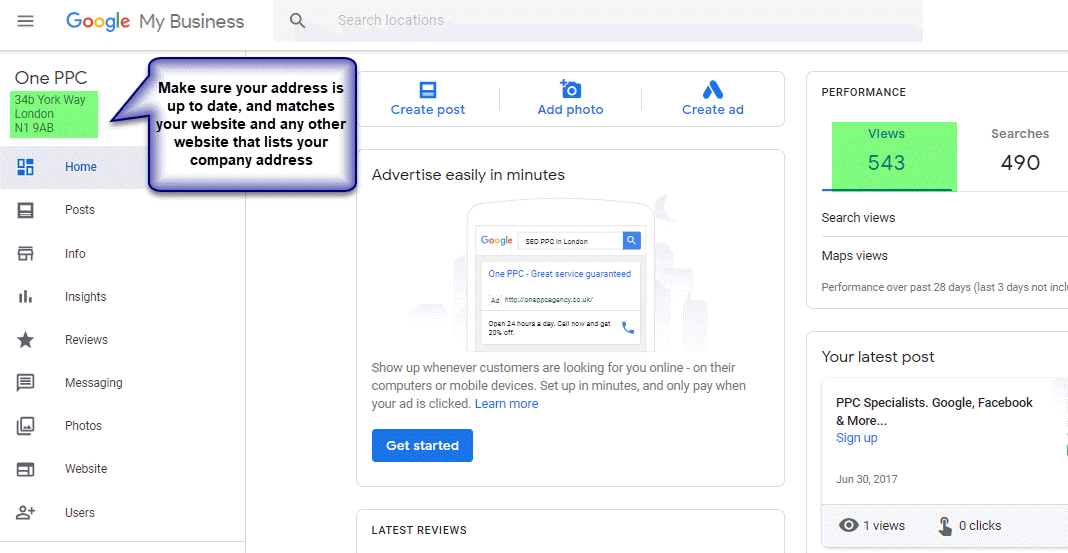
Keep names, addresses, telephone numbers, opening hours and service details current
Earn legitimate third-party coverage and customer reviews
Use relevant structured data without expecting it to guarantee inclusion
Include helpful images and videos with descriptive surrounding content
Make important content accessible in HTML rather than hiding it behind interactions
Google’s current guidance for generative AI search specifically prioritises useful, original and non-commodity content. Producing hundreds of near-identical town pages or rewriting the same generic answer for every location is the opposite of that approach.
Create Information That an AI System Can Verify
AI visibility tends to favour information that is explicit and supported. A vague claim such as “we are the best electricians in the area” provides little verifiable substance. Better evidence might include:
Areas genuinely served
Services undertaken and excluded
Qualifications and trade memberships
Real project examples
Response times, subject to clear conditions
Pricing ranges or the factors that affect cost
Original photographs of staff, premises and completed work
Named authors or reviewers with relevant experience
Customer reviews describing the actual service and location
This is not about writing unnaturally for a machine. It is about removing ambiguity for customers and systems alike.
Build a Local SEO Strategy Around Search Intent
Local keyword research should identify how potential customers describe the service, the problem and the location. It should then connect each meaningful intent with the most suitable page.
Common patterns include:
Service + town or city
Service + district, borough or postcode area
“Near me” searches
Problem + location
Emergency or same-day service + location
Specialist service + location
Price, cost, quote or consultation + location
Best, recommended or reviewed provider + location
Brand or practitioner name
Do not assume the highest-volume term is the best commercial target. A specific query with modest volume may reveal much stronger buying intent than a broad industry phrase. Google Ads data and Keyword Planner can provide useful directional evidence, but its volumes are estimates designed for advertisers rather than a complete organic search forecast.
Map Topics to Pages Without Creating Keyword Cannibalisation
Each important page should have a clear primary purpose. That does not mean one page for every keyword variation. Search engines understand close variants, synonyms and related intent increasingly well.
A practical structure might include:
A homepage for the business and its main market
A page for each commercially distinct service
A location page for each genuine office, clinic, shop or important service area
Service-and-location pages only when there is enough unique value to justify them
Case studies, guides and FAQs that support research and decision-making
Cannibalisation occurs when several pages compete for substantially the same intent without a useful distinction. The solution is usually to consolidate overlapping content, strengthen the preferred page and improve internal linking—not simply repeat the target phrase more often.
Avoid Doorway Pages
Creating dozens of pages that swap only the town name is not a sustainable local strategy. A useful location page should reflect genuine differences such as:
The exact services available in that area
A staffed branch or practitioner based there
Local project examples and photographs
Directions, transport, parking and accessibility
Area-specific pricing or availability where applicable
Testimonials from customers in or near the location
Relevant local regulations, property types or customer needs
A clear explanation of whether customers visit you or you travel to them
If there is nothing materially different to say, a strong regional service page may be better than a collection of thin town pages.
Optimise On-Page Local Relevance
On-page SEO helps search engines and visitors understand what a page offers and where that offer is available.
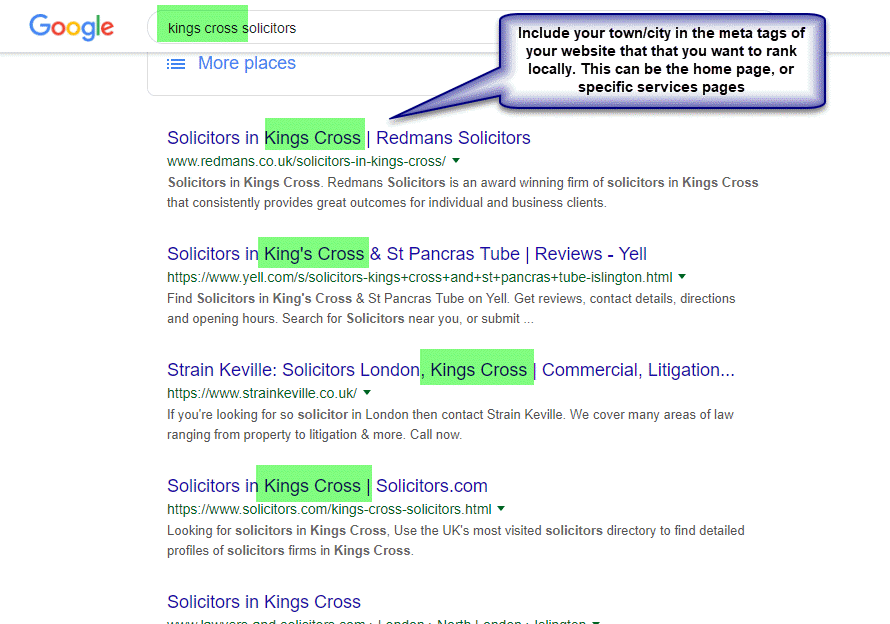
Write Accurate Page Titles
The title element remains useful because it helps describe the page and may influence the clickable title shown in search results.
A natural local service title might follow this pattern:
Primary Service in Location | Business Name
The location should only be included where it genuinely reflects the page. Avoid stuffing several towns, postcodes and service variations into the title. Google may rewrite an unclear or overloaded title, and users are less likely to trust it.
Make the Main Heading and Introduction Specific
The visible heading should confirm that the visitor has reached the right page. The opening section should explain:
What the service is
Who it is for
Where it is available
What makes the offer different
What the visitor should do next
Use location language naturally in the body copy, image captions, internal links and supporting details. Repetition for its own sake does not create relevance.
Improve Meta Descriptions for Click Quality
Meta descriptions are not a direct ranking lever, but they can help a searcher decide whether the page matches their requirement. Write a concise description containing the service, area, differentiator and next action. Do not promise availability, pricing or response times that the business cannot deliver.
Use Internal Links to Establish Relationships
Internal links help visitors and search engines move between related pages. A location page can link to the services available there; a service page can link to relevant case studies and areas; a guide can link to the commercial service that solves the problem.
Use descriptive anchor text. “Emergency plumbing services in Bristol” gives more context than repeated “click here” links, provided it reads naturally.
Show Evidence, Not Generic Claims
Local service pages often repeat the same empty phrases: trusted, professional, high quality and customer focused. Replace unsupported adjectives with evidence:
Years or depth of relevant experience
Named accreditations
Review excerpts linked to their source
Before-and-after examples
Measurable case-study outcomes
Staff profiles and qualifications
Clear guarantees and their conditions
Original photographs rather than generic stock images
Our wider SEO services approach treats content, user experience, technical quality and marketing proposition as connected rather than isolated checklists.
Make the Website Fast, Mobile-Friendly and Easy to Use
Google uses mobile-first indexing, which means the mobile version of a website is the primary version used for indexing. More importantly, many local searches happen on a phone when the customer wants to call, navigate, book or compare providers immediately.
Check the complete mobile journey:
Is the text readable without zooming?
Are buttons large enough to use reliably?
Is the telephone number easy to find and tap?
Does the form work with mobile keyboards and autofill?
Are opening hours and service areas obvious?
Can a customer complete a booking or payment without unnecessary steps?
Are intrusive banners obscuring the content?
Speed matters for users and can contribute to page experience, but “three seconds” is not a universal SEO cliff. Improve real-world Core Web Vitals and loading performance, then judge the commercial result rather than chasing a perfect laboratory score.
Common improvements include correctly sizing and compressing images, reducing unnecessary scripts, using effective caching, improving hosting and removing bloated plugins or tracking code that provides little value.
Create Content That Builds Local Authority
Content marketing should help a prospective customer solve a problem or make a decision. Publishing articles merely to keep a blog active rarely creates a competitive advantage.
Useful local content may include:
Pricing and cost guides
Service comparison pages
Buying checklists
Explanations of local regulations or planning requirements
Case studies from recognisable areas
Seasonal advice relevant to the local market
Videos answering common pre-sale questions
Original local data or customer insights
Guides to what happens before, during and after the service
This content can attract links, support service pages, answer longer questions and provide source material for AI-generated search experiences. Our content marketing guide explains how educational content supports wider organic visibility.
The strongest content contains something competitors cannot reproduce immediately: experience, data, opinion, methodology, customer evidence or genuine local knowledge.
Add Appropriate Local Business Structured Data
Structured data gives search engines explicit information about a page. For a local business, relevant LocalBusiness markup may include the business name, address, telephone number, URL, opening hours, geographical coordinates and business type.
Use the most specific valid subtype available, ensure the marked-up information is visible and accurate, and define each genuine location separately where appropriate. Validate the implementation with Google’s Rich Results Test.
Structured data helps machines interpret information and can make pages eligible for certain search features. It does not guarantee a rich result, a map ranking or inclusion in an AI answer. Google’s LocalBusiness structured-data documentation provides the supported properties and implementation rules.
Do not add self-serving review markup in the expectation that star ratings will appear for the business’s own local organisation pages. Markup should follow Google’s eligibility policies and must represent content that users can actually see.
Optimise the Google Business Profile
Google My Business is now called Google Business Profile. For eligible local companies, it is one of the most important assets in local search.
Claim and verify the correct profile, then complete every relevant field accurately:
Real-world business name
Primary and additional categories
Address or service area
Main telephone number
Website and appointment links
Normal and special opening hours
Services, products and attributes where supported
Business description
Original photographs and videos
Completeness helps Google understand the business and helps customers decide whether it is suitable. Accuracy matters more than trying to force extra keywords into the business name or categories.
Choose Categories Carefully
The primary category should represent the business’s main activity as precisely as possible. Add relevant secondary categories for genuine additional services, but do not select every loosely related option.
Categories affect how Google understands relevance. They should describe what the business is, while services and website pages can explain what it offers in more detail.
Use a Real Address and Honest Service Area
A service-area business should hide its address when customers are not served there and define an accurate operating area. Google does not permit a virtual office merely to create a map presence. A co-working location has to meet strict staffing, signage and customer-contact conditions to qualify.
Creating false offices in several cities may produce temporary visibility, but it also creates suspension risk and damages trust. Follow Google’s guidelines for representing a business rather than copying competitors that appear to be breaking them.
Keep the Profile Active and Accurate
Update holiday hours, services, photographs, products and important business changes. Google Business Profile posts can communicate offers or updates and may improve customer engagement, but regular posting should not be presented as a guaranteed ranking factor.
The practical value is freshness and conversion: a current profile is more useful and more convincing when a potential customer compares options.
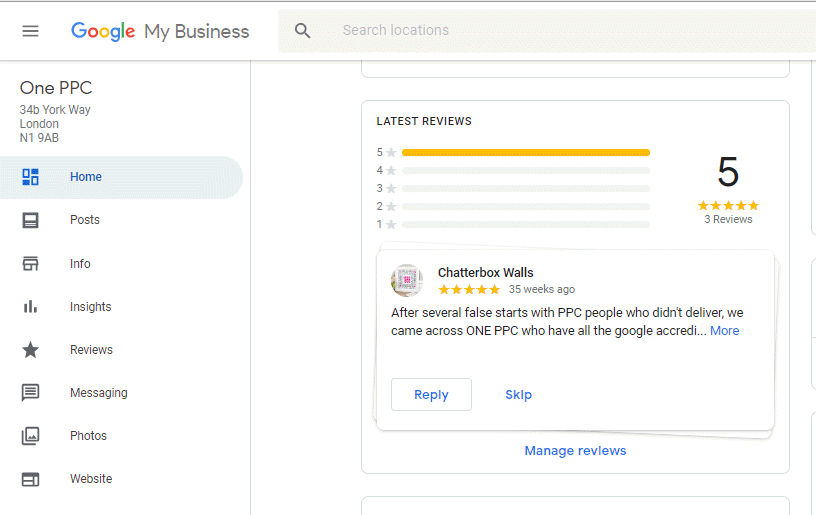
Build a Sustainable Review System
Reviews can influence both local prominence and customer choice. Google states that review quantity and positive ratings can contribute to local ranking, but the quality and credibility of the review profile matter commercially too.
Ask genuine customers for honest feedback as part of the normal customer journey:
After a completed service or purchase
After a positive support interaction
In a follow-up email or text
On a receipt, invoice or completion page
Through the Google review link or QR code
Do not buy reviews, reward only positive reviewers, discourage negative feedback or offer discounts in exchange for a review. Google prohibits incentivised and selectively solicited positive reviews under its fake-engagement policy.
Respond professionally to positive and negative feedback. A useful reply shows prospective customers that the business listens and takes responsibility. Avoid publishing private details or turning a disagreement into a public argument.
Do not focus only on the average star rating. Review velocity, recency, detail, service themes and operational patterns can reveal where the actual customer experience needs work. The best review strategy begins by delivering a service that people genuinely want to recommend.
Build Citations and Consistent Business Information
A citation is an online mention of a business, commonly including its name, address and telephone number. Relevant sources can include:
Established general directories
Industry associations
Professional registers
Local chambers and business groups
Supplier or manufacturer directories
Local news and community organisations
Mapping and navigation platforms
Consistency helps platforms reconcile that the references describe the same entity. Use the same real-world business name and keep core contact information current, but do not obsess over trivial punctuation differences that do not confuse a person or system.
Citation quality is more important than raw volume. Submitting the business to hundreds of low-quality directories can create administrative work, spam and outdated information without meaningful authority. Prioritise platforms that customers actually use or that carry genuine industry or local relevance.
Earn Local Links and Mentions
Links remain an important part of how search engines understand prominence and authority. The best local links usually result from real relationships or useful assets rather than mass outreach.
Potential sources include:
Trade bodies and professional memberships
Suppliers, partners and complementary businesses
Local sponsorships with genuine community involvement
Local press coverage
Universities, colleges or councils where there is a legitimate relationship
Charities and community organisations supported by the business
Original research, tools, guides or local resources worth referencing
A .gov.uk or educational link is not automatically powerful because of its domain ending. Its value depends on the legitimacy, relevance and context of the page and link. Do not manufacture scholarships, sponsorships or resource pages solely to obtain a prestigious-looking domain.
Competitor backlink analysis can reveal relevant publications, associations and local opportunities. Use it to understand the market, not to copy every link regardless of quality.
Do Not Treat Social Media as a Direct Ranking Shortcut
Social media can distribute content, build awareness, generate branded searches and help journalists, partners and customers discover the business. Profiles may also appear for branded searches and help confirm contact information.
However, likes, followers and paid social adverts should not be described as direct local ranking factors. Their SEO value is mostly indirect: better distribution can lead to real attention, searches, coverage, links, reviews and customers.
Create profiles on the platforms the target market genuinely uses. Keep essential information accurate and use the channels where the business can publish or respond consistently. An abandoned profile on every network is less valuable than a credible presence on the few that matter.
Claim Bing Places and Other Important Listings
Google is dominant in many markets, but it should not be the only source of accurate business information. Claim or update Bing Places for Business and other relevant mapping, navigation, industry and review platforms.
This can create additional discovery through Bing and Microsoft experiences while strengthening the consistency of the business entity across the web. As AI assistants use search indexes and third-party sources to answer local questions, accurate information beyond Google becomes increasingly useful.
Use Search Console and Analytics Properly
Google Webmaster Tools is now Google Search Console. Verify the website, submit an XML sitemap and monitor indexing, search performance, Core Web Vitals, manual actions and enhancement reports.
Submitting a sitemap helps Google discover and monitor important URLs, but it does not guarantee indexing or higher rankings. Use URL Inspection for specific pages and fix the cause when important content is not indexed.
Our updated Google Search Console guide explains how to interpret the principal reports.
Measure Business Outcomes, Not Rankings Alone
Rank tracking is useful, but local positions vary by location and context. A single city-centre rank checked from one device can create a misleading picture.
Monitor a balanced set of indicators:
Organic impressions and clicks by query and page
Visibility across representative local grid points where appropriate
Google Business Profile searches, views and interactions
Calls, direction requests and website visits
Form submissions, bookings and purchases
Qualified leads, opportunities and revenue
Review volume, rating, recency and themes
Indexed pages and technical errors
Conversion rate by landing page and device
Use call tracking carefully so that the correct business telephone number remains visible to search engines and directories while campaign-level attribution is preserved. For lead-generation companies, connect website and telephone enquiries with a CRM so local SEO can be evaluated by lead quality and revenue, not merely form counts.
Google Business Profile performance data can show views and interactions, but it is not a complete attribution system. Combine it with Search Console, analytics, call tracking and CRM outcomes.
Combine Local SEO With Paid Search
SEO and Google Ads serve different roles. Local SEO compounds over time and builds durable visibility, while advertising can create immediate coverage for priority services, locations and search terms.
Paid search can also provide useful market evidence:
Which search terms generate suitable enquiries
Which locations convert profitably
Which services have enough demand
Which messages improve click and conversion rates
Which landing pages produce qualified leads
Do not assume that a successful paid keyword will automatically rank organically, or that organic visibility makes advertising unnecessary. Test the incremental commercial value of each channel. Our guide to Google Ads for local businesses explains how the channels can work together.
Common Local SEO Mistakes
Creating a Google Business Profile for an Ineligible Location
Virtual offices, mailboxes and unstaffed locations can lead to profile suspension. Use a real eligible location and represent service areas honestly.
Adding Keywords to the Business Name
The profile name should reflect the real-world business name. Adding services and locations purely for ranking can breach the guidelines and create instability.
Building Thin Pages for Every Town
Near-duplicate pages provide little value and may compete with one another. Create a separate page only when the location has a genuine purpose and enough unique information.
Treating NAP Consistency as the Whole Strategy
Accurate listings are useful, but they cannot compensate for weak services, poor reviews, thin content or an unconvincing website.
Chasing Dwell Time
Adding videos, sliders or long introductions merely to keep visitors on a page confuses measurement with the objective. Help the person complete the task efficiently.
Publishing Generic AI Content at Scale
AI can support research, structure and editing. It should not be used to produce hundreds of interchangeable location pages without first-hand value. Add real expertise, evidence and editorial review.
Buying Reviews or Low-Quality Links
Both tactics can create policy risk and undermine the very trust local SEO is intended to build.
Reporting Traffic Without Revenue
More clicks are not automatically better. Track calls, suitable enquiries, appointments, customers and sales wherever possible.
A Practical Local SEO Action Plan
Establish the Baseline
Record current organic visibility, Google Business Profile performance, reviews, leads and revenue. Check rankings from several representative points within the target area rather than one location.
Fix Eligibility and Business Information
Confirm that the Google Business Profile follows the guidelines. Correct the name, categories, address or service area, telephone number, hours, website links and duplicates.
Improve the Commercial Website
Strengthen the offer, service explanations, proof, mobile experience, contact routes and follow-up process. SEO cannot be separated from conversion rate and customer experience.
Map Search Intent to the Site
Assign the main services and genuine locations to suitable pages. Consolidate duplication and identify missing content with real commercial value.
Strengthen Local Evidence
Add original case studies, staff expertise, photographs, accreditations, customer reviews and local knowledge. Replace generic claims with proof.
Repair Technical Foundations
Check indexing, canonical URLs, internal links, mobile rendering, page speed, structured data, XML sitemaps, redirects and broken pages.
Build Reviews Into Operations
Create a compliant, repeatable request process and respond to feedback. Use review themes to improve the service itself.
Clean and Expand Important Listings
Correct the major directories and platforms first. Add only relevant industry and local sources rather than pursuing citation volume.
Earn Authority Through Real Activity
Develop partnerships, useful resources, community participation, data, stories and expert commentary that can earn legitimate links and mentions.
Measure the Full Funnel
Report visibility, enquiries, qualified leads, sales and revenue. Use the results to prioritise services, locations and pages with the strongest commercial potential.
The Future of Local SEO
Local SEO is becoming less about inserting a city name into a page and more about building a verifiable local entity that search engines, AI systems and customers can understand and trust.
Traditional organic results remain important, but the customer may make a decision from a map result, review profile, video, directory or AI answer before visiting the website. Businesses therefore need consistent facts, strong first-party content and credible third-party evidence across the wider search ecosystem.
The companies best placed to succeed will not be those producing the most pages or collecting the most directory links. They will be those that:
Deliver a better service
Explain it more clearly
Demonstrate genuine local experience
Earn stronger customer feedback
Make their information easy to verify
Remove friction from enquiry to sale
Measure which visibility produces commercial value
SEO still involves titles, links, structured data, profiles and technical checks. Those elements help search engines discover and interpret what exists. They do not replace the underlying requirement to be a relevant, credible and satisfying choice.
Need Help With Local SEO?
One PPC combines search strategy, website improvement, content, paid advertising and conversion measurement. This allows local SEO to be judged by the outcomes that matter—qualified enquiries, customers and revenue—rather than rankings in isolation.
If you want to understand where your local visibility is being lost, begin with a review of the website, Google Business Profile, competitors, tracking and customer journey. The result should be a prioritised plan based on commercial opportunity, not a generic list of SEO tasks.